UI / UX Design
Treehouse
I led the entire design process from research to final delivery. My responsibilities included conducting user interviews, mapping user flows, creating wireframes and high-fidelity prototypes, and collaborating closely with the development team to ensure HIPAA-compliant implementation.
Year :
2021
Role:
UX Designer
Industry :
Healthcare
Client :
Treehouse
Project Duration :
3 weeks
Project Overview
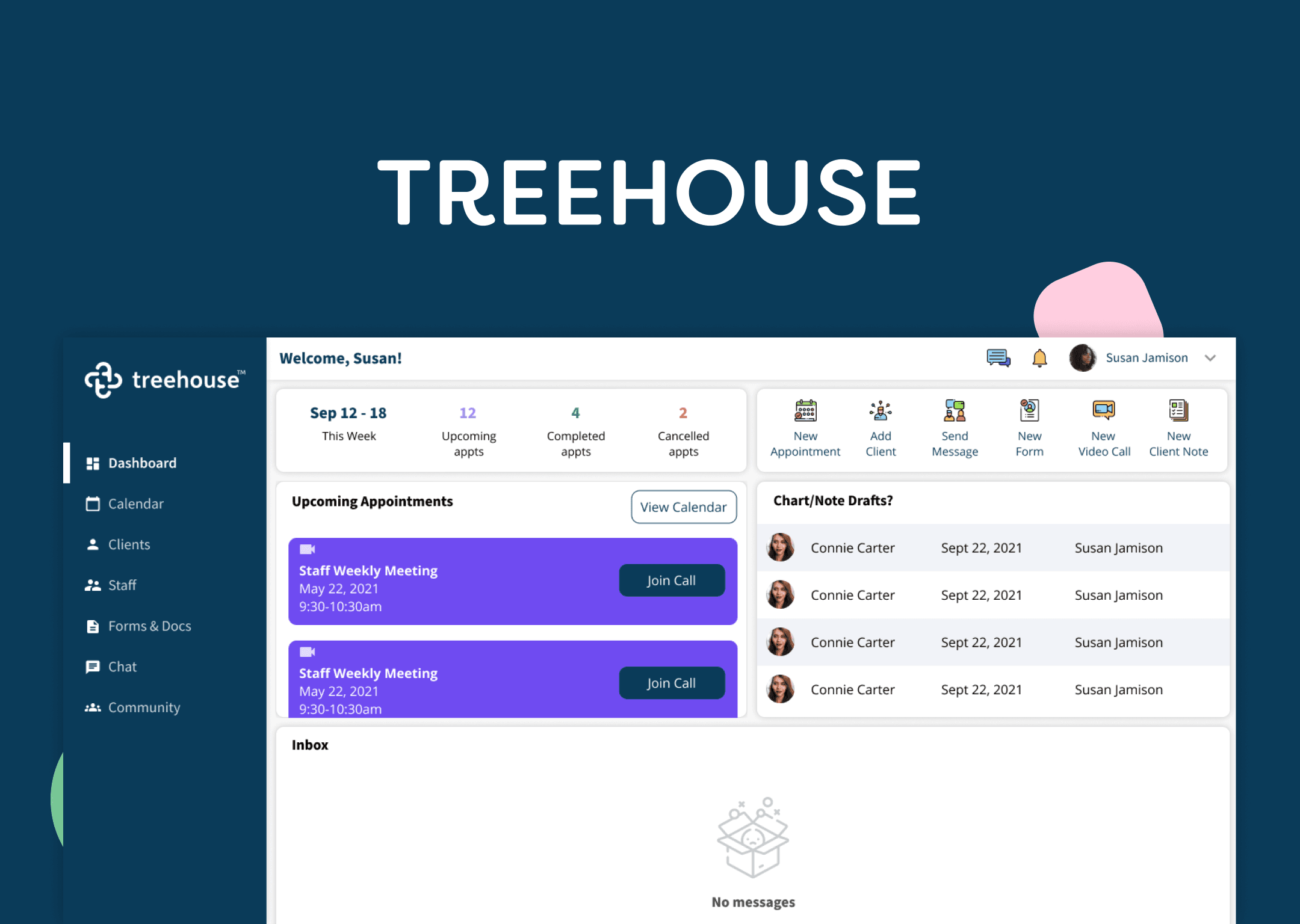
Treehouse is a digital platform that supports allied healthcare professionals in managing and growing their practices. The challenge was to design a customizable e-form feature that would enable providers to easily create, edit, and manage client intake documents, while ensuring compliance with healthcare regulations.
Role: Lead UX Designer
Team: Myself, Front-End Developer, Back-End Developer
Tools: Figma, User Interviews
The Challenge
Healthcare providers using Treehouse needed a more flexible way to handle client intake forms. At the time, many relied on third-party tools with limited functionality, which created inefficiencies and prevented them from offering a seamless onboarding experience. The new solution had to:
Allow providers to create and customize their own forms.
Ensure secure data management and HIPAA compliance.
Offer features such as archiving, visibility controls, and client tracking.
Improve subscription conversion rates for Treehouse.
Research & Approach
I conducted six remote interviews with healthcare providers, including midwives, doulas, and child educators, to better understand their workflows, pain points, and priorities when creating and managing forms.
Key insights revealed recurring friction in the form management process, particularly the inability to edit forms once sent, the lack of version control, and limited visibility settings. These constraints often led to wasted administrative time and increased support requests.
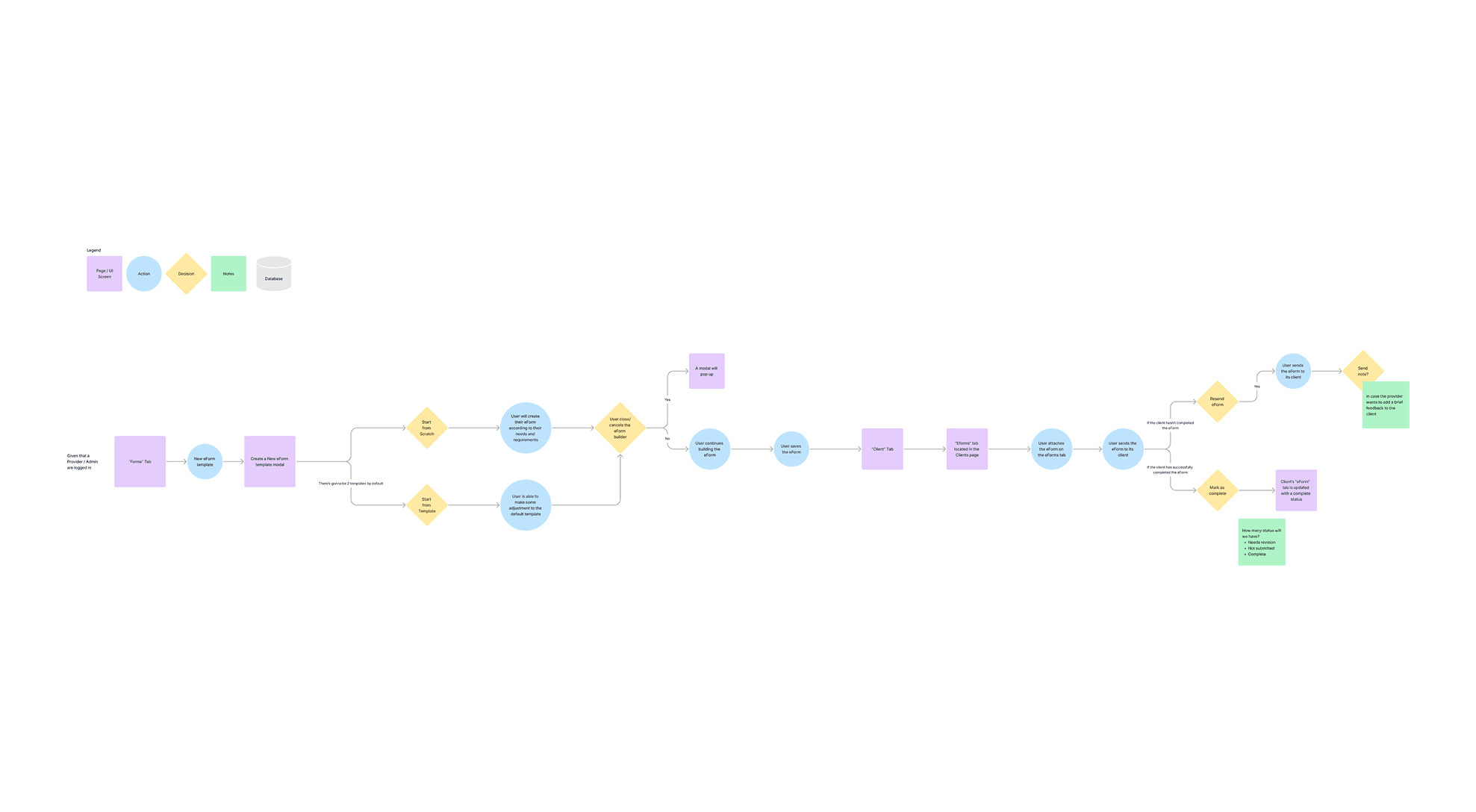
To synthesize findings, I mapped the end-to-end user journey and identified high-friction moments in the workflow. One critical insight was the need for flexibility after sending forms, as providers frequently needed to update information based on patient responses or changing care needs.
I sketched initial user flows in Figma and translated them into wireframes. Across three iterative design sprints, I incorporated feedback from both providers and internal stakeholders, refining the interface to balance usability, efficiency, and compliance requirements.
Design Solution
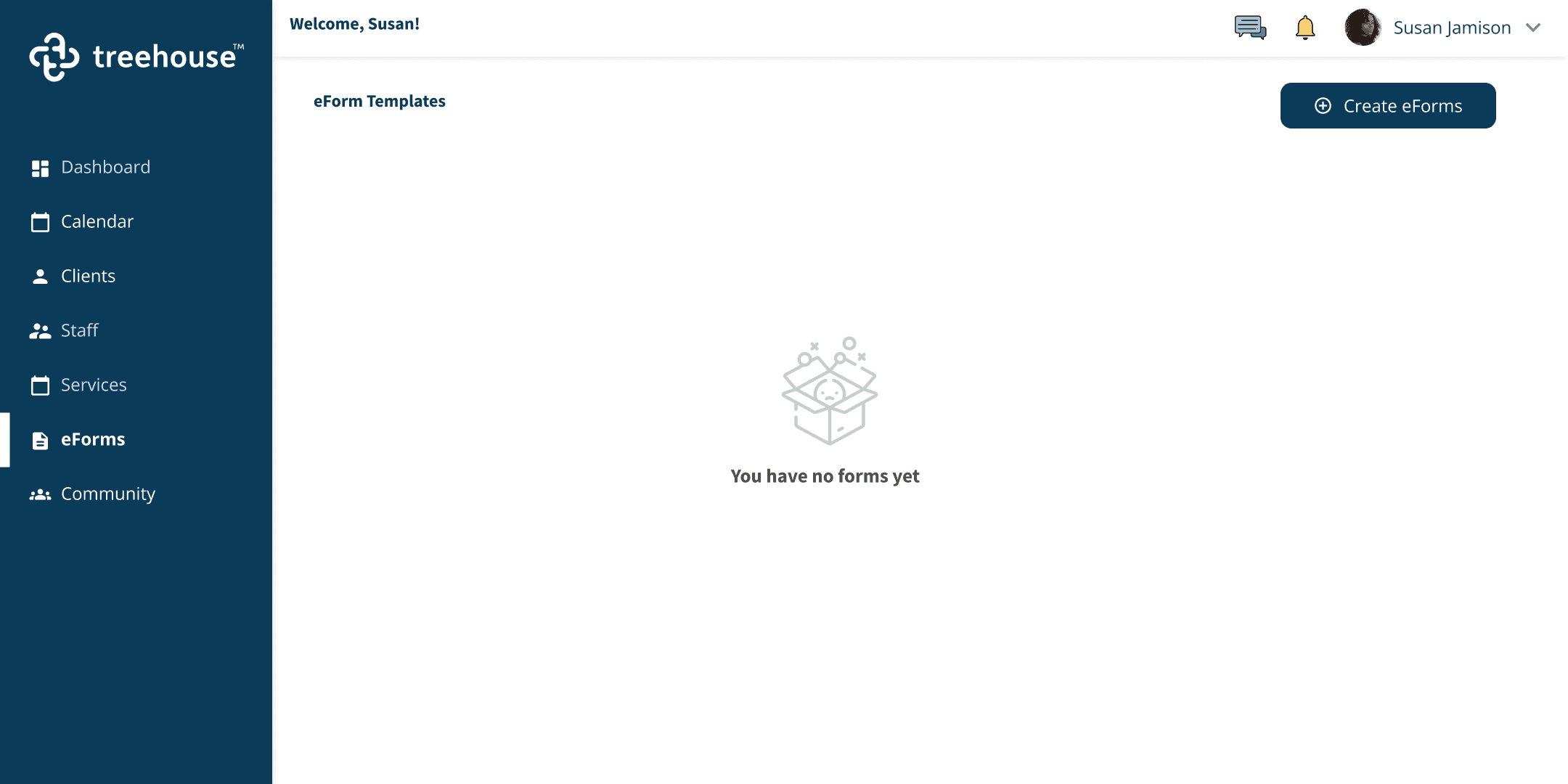
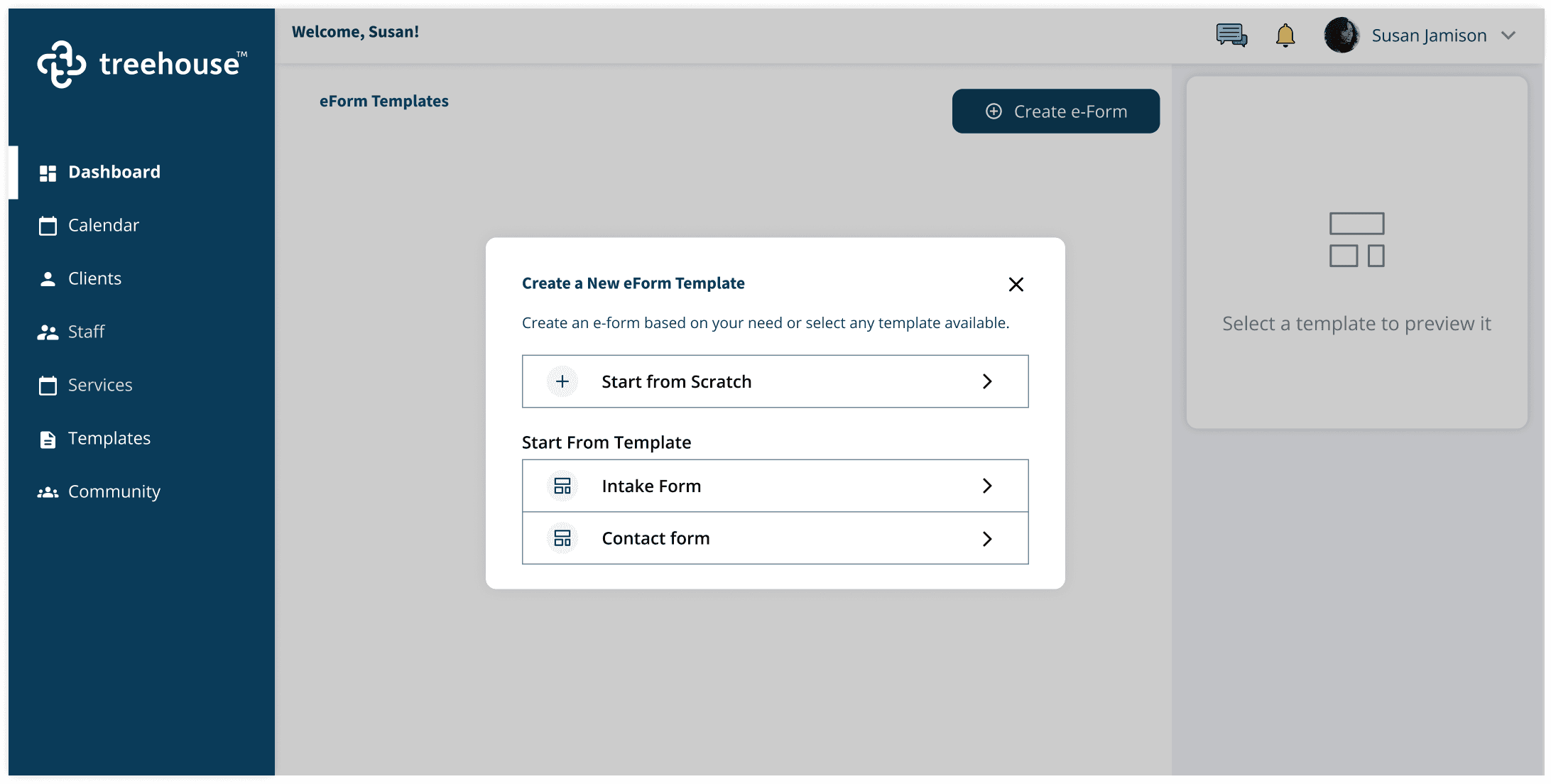
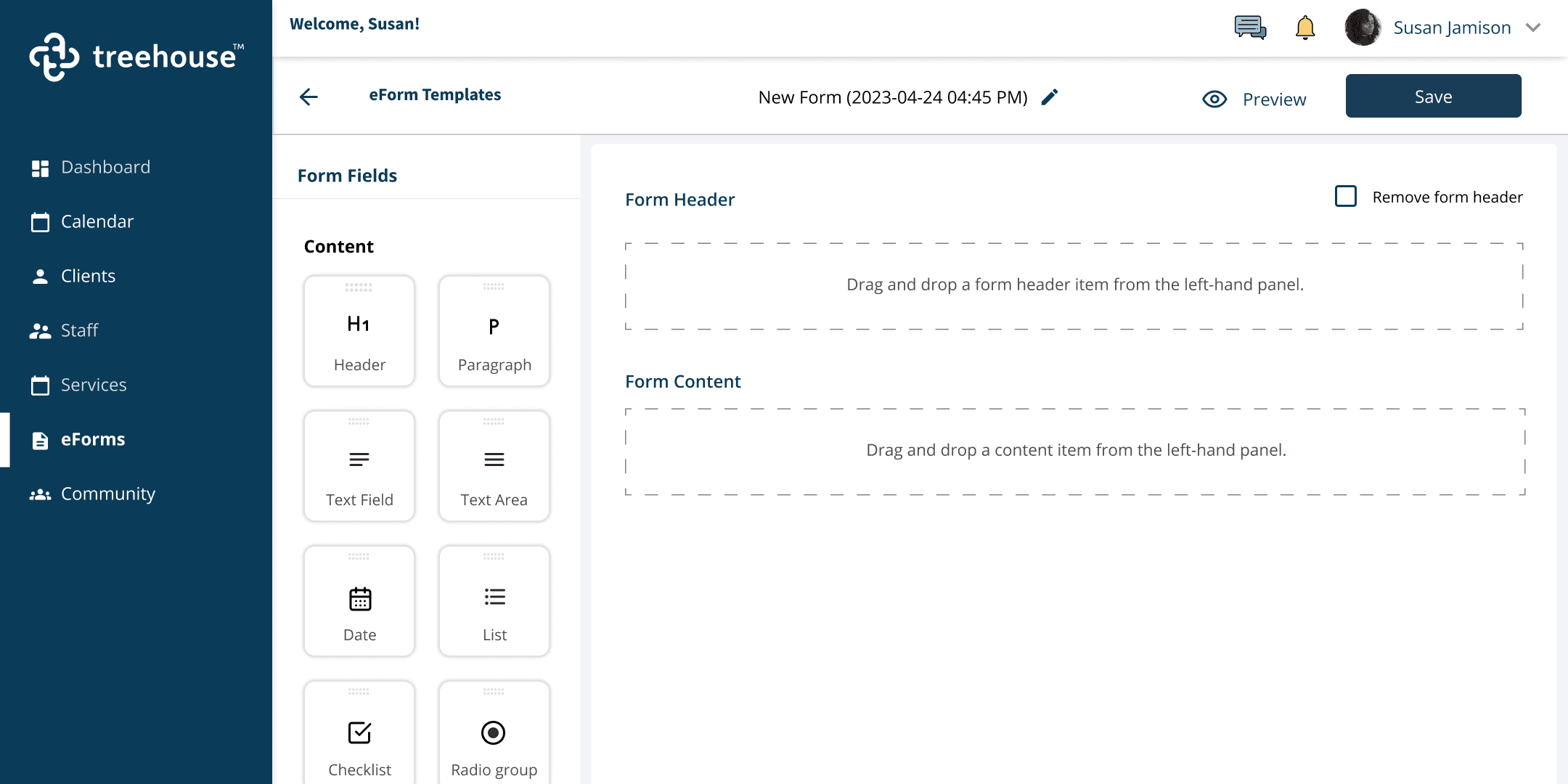
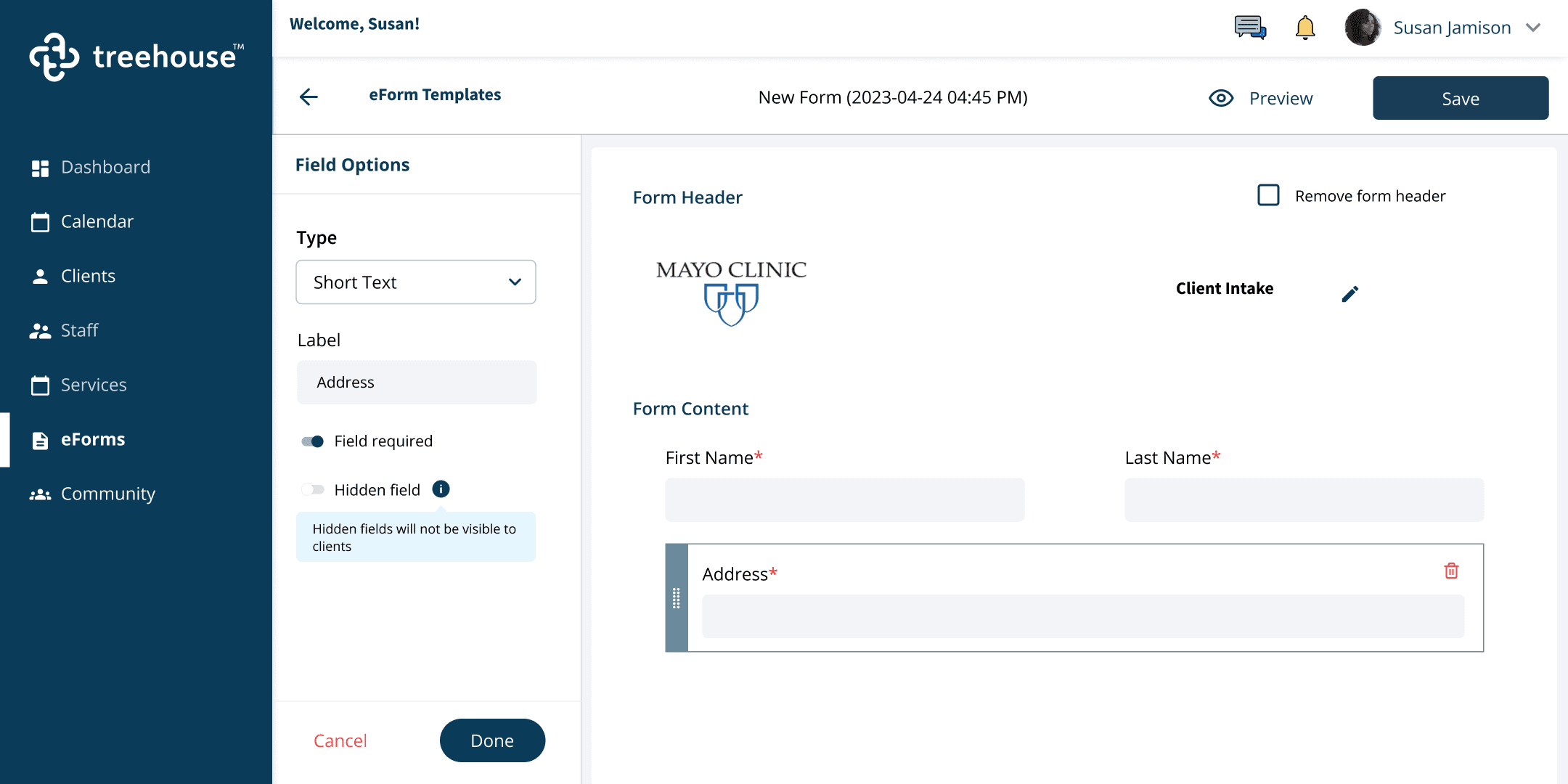
The final e-form builder featured:
Drag-and-drop creation for quick customization.
Visibility settings to control whether forms were for internal or client use.
Archiving and editing options to prevent clutter and improve reusability.
Secure, encrypted submission to maintain HIPAA compliance.
Real-time tracking so providers could see when forms were viewed and completed.
Impact
The e-form builder was launched in October 2021 and quickly gained adoption among providers. Within four weeks, the feature drove an average of 5–6 additional new subscriptions per week, representing a 150% increase in membership growth compared to the previous baseline. The addition of a 7-day trial period further improved conversion rates by 20%. Providers also reported a 40% reduction in form-related support requests, saving time for both staff and clients.
Reflections & Next Steps
This project taught me the importance of balancing customization with compliance. While providers valued flexibility, their top priority was always data security. If I were to iterate further, I would explore adding pre-built templates for common healthcare forms, as well as advanced analytics to track completion times and identify bottlenecks in the client onboarding process.
More Projects
More Projects

UI / UX Design
Treehouse
I led the entire design process from research to final delivery. My responsibilities included conducting user interviews, mapping user flows, creating wireframes and high-fidelity prototypes, and collaborating closely with the development team to ensure HIPAA-compliant implementation.
Year :
2021
Role:
UX Designer
Industry :
Healthcare
Client :
Treehouse
Project Duration :
3 weeks
Project Overview
Treehouse is a digital platform that supports allied healthcare professionals in managing and growing their practices. The challenge was to design a customizable e-form feature that would enable providers to easily create, edit, and manage client intake documents, while ensuring compliance with healthcare regulations.
Role: Lead UX Designer
Team: Myself, Front-End Developer, Back-End Developer
Tools: Figma, User Interviews
The Challenge
Healthcare providers using Treehouse needed a more flexible way to handle client intake forms. At the time, many relied on third-party tools with limited functionality, which created inefficiencies and prevented them from offering a seamless onboarding experience. The new solution had to:
Allow providers to create and customize their own forms.
Ensure secure data management and HIPAA compliance.
Offer features such as archiving, visibility controls, and client tracking.
Improve subscription conversion rates for Treehouse.
Research & Approach
I conducted six remote interviews with healthcare providers, including midwives, doulas, and child educators, to better understand their workflows, pain points, and priorities when creating and managing forms.
Key insights revealed recurring friction in the form management process, particularly the inability to edit forms once sent, the lack of version control, and limited visibility settings. These constraints often led to wasted administrative time and increased support requests.
To synthesize findings, I mapped the end-to-end user journey and identified high-friction moments in the workflow. One critical insight was the need for flexibility after sending forms, as providers frequently needed to update information based on patient responses or changing care needs.
I sketched initial user flows in Figma and translated them into wireframes. Across three iterative design sprints, I incorporated feedback from both providers and internal stakeholders, refining the interface to balance usability, efficiency, and compliance requirements.
Design Solution
The final e-form builder featured:
Drag-and-drop creation for quick customization.
Visibility settings to control whether forms were for internal or client use.
Archiving and editing options to prevent clutter and improve reusability.
Secure, encrypted submission to maintain HIPAA compliance.
Real-time tracking so providers could see when forms were viewed and completed.
Impact
The e-form builder was launched in October 2021 and quickly gained adoption among providers. Within four weeks, the feature drove an average of 5–6 additional new subscriptions per week, representing a 150% increase in membership growth compared to the previous baseline. The addition of a 7-day trial period further improved conversion rates by 20%. Providers also reported a 40% reduction in form-related support requests, saving time for both staff and clients.
Reflections & Next Steps
This project taught me the importance of balancing customization with compliance. While providers valued flexibility, their top priority was always data security. If I were to iterate further, I would explore adding pre-built templates for common healthcare forms, as well as advanced analytics to track completion times and identify bottlenecks in the client onboarding process.
More Projects
More Projects
UI / UX Design
Treehouse
I led the entire design process from research to final delivery. My responsibilities included conducting user interviews, mapping user flows, creating wireframes and high-fidelity prototypes, and collaborating closely with the development team to ensure HIPAA-compliant implementation.
Year :
2021
Role:
UX Designer
Industry :
Healthcare
Client :
Treehouse
Project Duration :
3 weeks
Project Overview
Treehouse is a digital platform that supports allied healthcare professionals in managing and growing their practices. The challenge was to design a customizable e-form feature that would enable providers to easily create, edit, and manage client intake documents, while ensuring compliance with healthcare regulations.
Role: Lead UX Designer
Team: Myself, Front-End Developer, Back-End Developer
Tools: Figma, User Interviews
The Challenge
Healthcare providers using Treehouse needed a more flexible way to handle client intake forms. At the time, many relied on third-party tools with limited functionality, which created inefficiencies and prevented them from offering a seamless onboarding experience. The new solution had to:
Allow providers to create and customize their own forms.
Ensure secure data management and HIPAA compliance.
Offer features such as archiving, visibility controls, and client tracking.
Improve subscription conversion rates for Treehouse.
Research & Approach
I conducted six remote interviews with healthcare providers, including midwives, doulas, and child educators, to better understand their workflows, pain points, and priorities when creating and managing forms.
Key insights revealed recurring friction in the form management process, particularly the inability to edit forms once sent, the lack of version control, and limited visibility settings. These constraints often led to wasted administrative time and increased support requests.
To synthesize findings, I mapped the end-to-end user journey and identified high-friction moments in the workflow. One critical insight was the need for flexibility after sending forms, as providers frequently needed to update information based on patient responses or changing care needs.
I sketched initial user flows in Figma and translated them into wireframes. Across three iterative design sprints, I incorporated feedback from both providers and internal stakeholders, refining the interface to balance usability, efficiency, and compliance requirements.
Design Solution
The final e-form builder featured:
Drag-and-drop creation for quick customization.
Visibility settings to control whether forms were for internal or client use.
Archiving and editing options to prevent clutter and improve reusability.
Secure, encrypted submission to maintain HIPAA compliance.
Real-time tracking so providers could see when forms were viewed and completed.
Impact
The e-form builder was launched in October 2021 and quickly gained adoption among providers. Within four weeks, the feature drove an average of 5–6 additional new subscriptions per week, representing a 150% increase in membership growth compared to the previous baseline. The addition of a 7-day trial period further improved conversion rates by 20%. Providers also reported a 40% reduction in form-related support requests, saving time for both staff and clients.
Reflections & Next Steps
This project taught me the importance of balancing customization with compliance. While providers valued flexibility, their top priority was always data security. If I were to iterate further, I would explore adding pre-built templates for common healthcare forms, as well as advanced analytics to track completion times and identify bottlenecks in the client onboarding process.